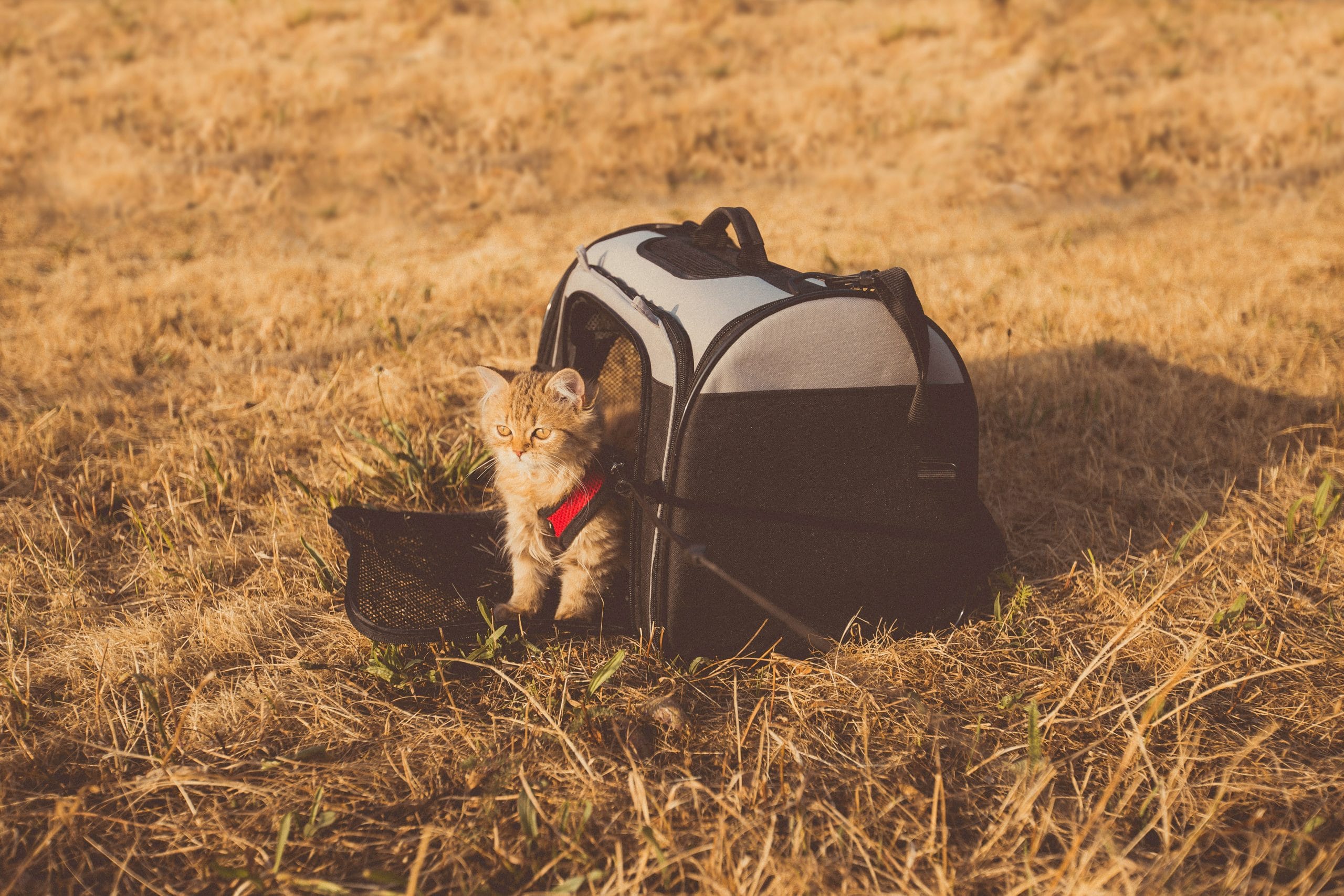
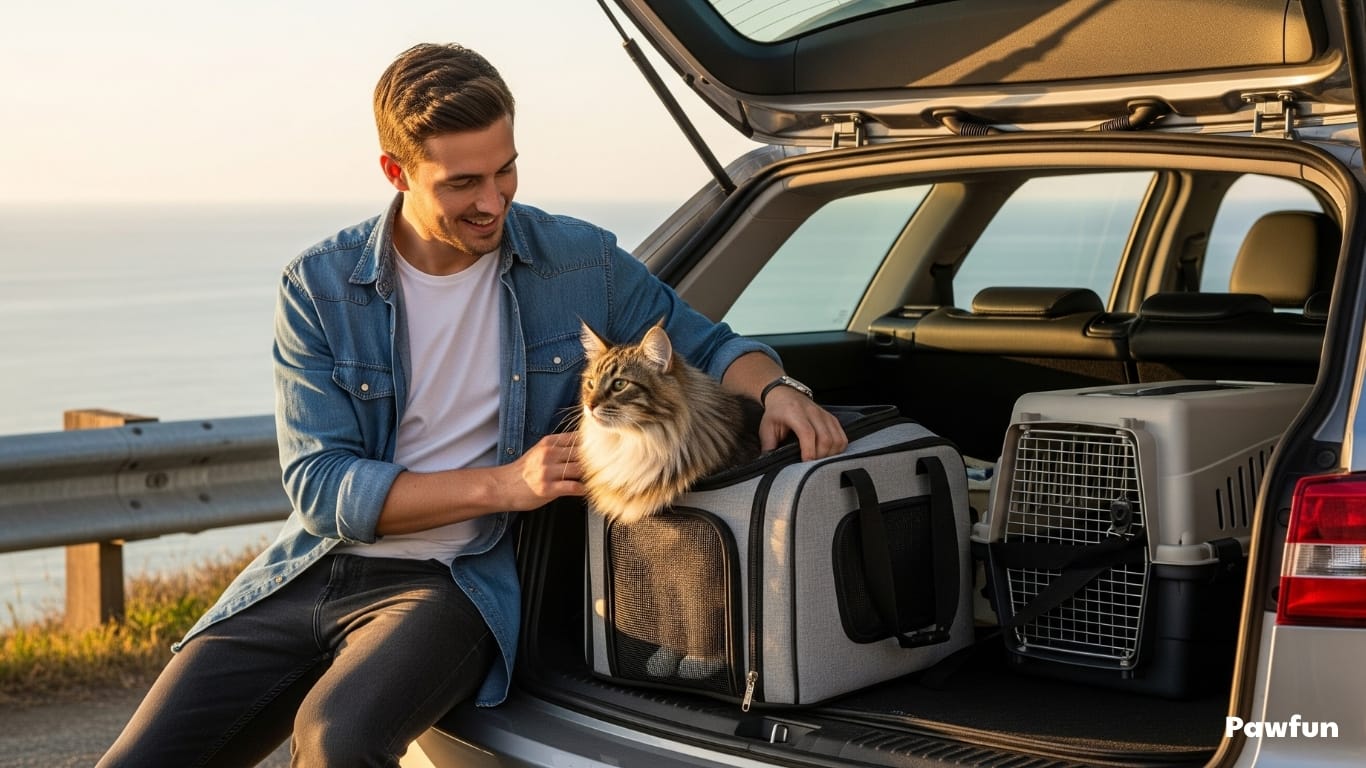
Cat-carrier-1
Jul 19

Cat Carrier: The Ultimate Guide to Choosing a Safe & Comfy One

By Jessica Monroe | How-To & Tips

Choosing the right cat carrier is a key safety decision for your pet. However, here’s a shocking fact most owners don’t know. A 2015 study from the Center for Pet Safety tested standard carriers. In fact, 100% of them failed in crash simulations.

That staggering statistic is why this guide exists. So, we’ll cut through the marketing noise to give you clear advice. Specifically, you will learn how to choose between hard-shell and soft-sided carriers. You will also find out the safest place to put a carrier in your car.

Beyond road safety, we will also debunk the “airline-approved” label. Then, we’ll show you what vets recommend for a “fear-free” design. Our goal is simple. Ultimately, we want to help you turn the carrier from a source of stress into a safe space. This will ensure your cat’s well-being on any journey.

Section 1: The Foundation of Your Choice – Decoding Carrier Types and Your Core Needs

Before you even start looking at specific models, it’s essential to lay the groundwork. The perfect cat carrier is a balance of several key factors. I used to think any box would do, but I quickly learned that a thoughtful approach from the start saves a lot of stress—for both me and my cat—down the line.
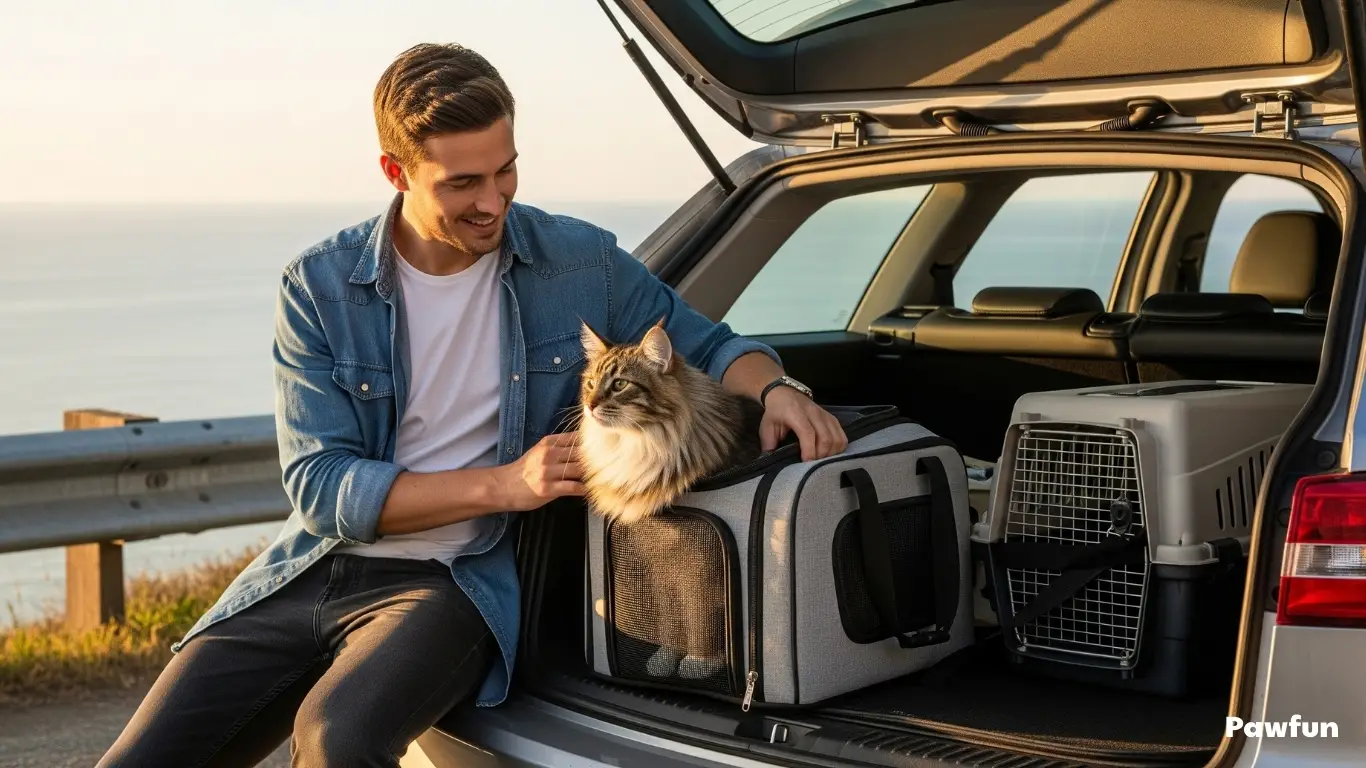
Cat Carrier

The Three Pillars of Selection

The “best” carrier is a myth; the best carrier for you is a reality. Your decision should rest on three core pillars:

  1. The Cat: This is your starting point. Consider your cat’s size, weight, and, most importantly, temperament. A small, calm kitten carrier won’t work for a 15-pound Maine Coon. Is your cat an anxious traveler who hides, or a budding escape artist who tests every seam and zipper? A cat known for scratching or chewing will need a more durable option than a placid senior. Honesty about your cat’s personality is the first step toward a successful choice. For larger felines, a large cat carrier is non-negotiable for ensuring they have adequate space to stand and turn around comfortably.
  2. The Owner: Now, let’s be practical about your limits. What’s your budget? Also, can you easily carry a heavy carrier and a cat? I’ll share a story. I once bought a bulky carrier that was great for safety. But it was a nightmare to lug up three flights of stairs. Then, think about storage. Where will you keep it? A soft-sided model that folds down might be better for a small space. Your comfort is also a key factor.
  3. The Journey: Finally, how will you use the carrier most of the time? For Vet Visits, a simple, sturdy carrier might be perfect. For Road Trips, however, you will need to focus on car safety features. And for Air Travel, you will face a different set of rules. You’ll need a special airline-approved cat carrier for this. In short, defining the primary use will help narrow down your options.

The Fundamental Decision: Hard-Shell vs. Soft-Sided Carriers

This is the first primary choice you’ll make. There are several types of cat carriers. However, nearly all fall into two categories. Each type has clear pros and cons. So, the right one for you depends on the needs you just identified.

  • Hard-Sided Cat Carrier:
    First, let’s talk about security. A hard-sided cat carrier is like a fortress. They are usually made from heavy-duty plastic. Because of this, they offer great protection from bumps. They are also very resistant to a cat’s claws and teeth. Therefore, they are a great choice for destructive or anxious cats. Another huge plus is how easy they are to clean. For example, if your cat has an accident, you can just wipe or hose it down. For these reasons, they are often seen as the safest choice. Their build is strong, and they prevent escapes. But what about the downsides? They are bulky and heavy. They also often lack a cozy interior.
  • Soft-Sided Cat Carrier:
    A soft-sided carrier focuses on comfort and ease of carrying. They use tough fabrics like nylon. They also often have soft, padded interiors. In addition, they are much lighter than hard-shell models. Many can also be folded for easy storage and travel. Their flexibility is a big plus for air travel. This is because you can gently press the carrier to fit under an airplane seat. However, there are some trade-offs. They offer less protection from a big impact. Also, a determined cat can damage the fabric with its claws. So, you need to check for high-quality mesh and strong zippers.

Comparison Table: Hard-Shell vs. Soft-Sided

The Modern Fleet: A Critical Look at Backpacks, Strollers, and Rolling Carriers

In recent years, “lifestyle” carriers have become popular. These include backpacks, strollers, and rolling carriers. Of course, the hands-free ease is very appealing. However, you must weigh this against your cat’s welfare. Many vets express concern over these designs. For example, a cat backpack often lacks good airflow. It also may not have enough space for a cat to move around. As a result, walking can be a jarring and stressful experience for them.

While a rolling cat carrier seems like a great back-saver, the bumps and vibrations from the sidewalk can be highly unpleasant for your pet. Unless you find a model designed explicitly with superior ventilation, a stable base, and ample room, it’s often best to stick with more traditional designs that prioritize the cat’s experience over the owner’s convenience.

The Emergency Option: Understanding the Limited Role of Cardboard Carriers

You’ve probably seen them at shelters or vet offices. Cardboard carriers serve a single purpose: temporary, emergency, or one-time transport. As such, they are not a long-term solution. The reason is simple: they offer almost no protection, soak through easily from accidents or rain, and a panicked cat can easily claw or chew its way out. Consider them a last resort, not a permanent part of your pet care toolkit.

Section 2: Anatomy of a Superior Carrier – A Feature-by-Feature Masterclass

Once you’ve decided on a type, it’s time to look at the details. The difference between a cheap and a quality carrier is in the features. Specifically, these features ensure safety, security, and comfort. Now, this is where you become a savvy shopper.
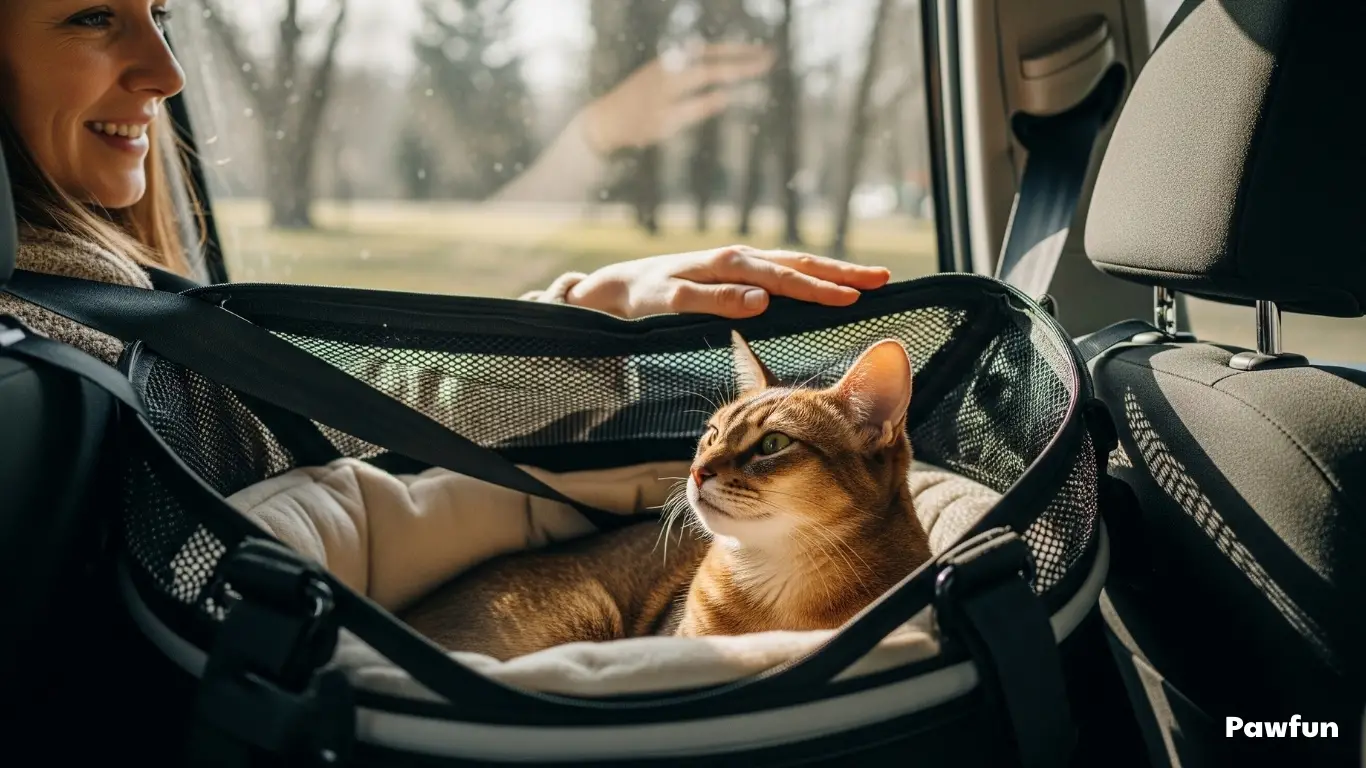
Cat Carrier

Tier 1: Non-Negotiable Safety, Security, and Durability

These are the features you should never compromise on. They are the foundation of a truly reliable and safe cat carrier.

  • Materials: First, look at the materials. For a soft-sided carrier, look for tough fabrics like ballistic nylon. This ensures it can handle wear and tear. In particular, pay attention to the mesh windows. They are often a weak point. So, they should be made of strong, anti-scratch material, not flimsy mesh. For a hard-sided carrier, find a durable plastic. It should not be brittle or crack under pressure.
  • Locking Mechanisms: Next, check the locks. This is a key feature for an escape-proof carrier. For hard-shell models, metal nuts and bolts are the best option. They hold the top and bottom halves together securely. Alternatively, sliding plastic locks are a decent second choice. However, be careful with simple side snaps or plastic pegs. A determined cat can pop them open. Also, they can become brittle and break over time. Now, let’s talk about soft-sided carriers. For these, the zippers are everything. This means the zippers must be strong and self-locking. This feature prevents them from creeping open under pressure. Finally, the best models have clips to lock the zippers together.
  • Crash-Test Certification: This feature separates a good carrier from a great one for car travel. The Center for Pet Safety (CPS) runs strict crash tests on pet products. A “CPS Certified” carrier has passed these tests. In other words, it is proven to protect your pet in a crash. Some brands like Sleepypod are famous for this approval. Essentially, this turns the carrier from a simple box into real safety gear, like a child’s car seat. Therefore, it is a wise investment if you travel by car often.

Sizing for Safety, Not Just Space: The “1.5x Rule” Explained

It’s a common mistake to think that bigger is better for a cat carrier. I made this error myself. I thought I was giving my cat a roomy, luxury space. In reality, a carrier that is too large is a safety hazard. For example, during a sudden stop in a car, your cat can slide and tumble inside. This can cause injury and stress.

The rule of thumb, often called the “1.5x Rule,” is that the carrier should be approximately one and a half times the size of your cat. This gives them enough room to stand up and turn around, but not so much space that the car’s motion tosses them about. A snug, den-like feel is more comforting and secure for most cats.

To get the right size, you’ll need to measure your cat:

  1. Length: Measure from the tip of their nose to the base of their tail (don’t include the tail itself).
  2. Height: Measure from the top of their head to the floor while they are standing.

Use these measurements to check the interior dimensions of any cat carrier you’re considering.

Feline-First Design: Optimizing for Comfort and Well-being

A great carrier isn’t just safe; it’s also designed with a cat’s psychology in mind. These features can dramatically reduce your cat’s stress levels.

  • Ventilation: This is non-negotiable. A carrier must have good airflow to prevent overheating and ensure your cat can breathe easily. Look for mesh windows on at least two sides, and ideally on three or four sides.
  • Ease of Access: Forcing a reluctant cat through a small front door is stressful for everyone involved. This is why veterinarians so highly recommend a top-loading cat carrier. It allows you to gently lower your cat into the carrier, which is a much less confrontational approach. However, for the ultimate low-stress experience, look for “clamshell” designs on hard carriers, where the entire top half can be removed. The primary benefit of this design is that it allows for “fear-free” vet exams where the cat can remain in the familiar, secure bottom half of the carrier.
  • Interior Comfort: The inside of the carrier should be a welcoming space. To begin with, a soft, removable, and washable liner is a must-have for comfort and hygiene. Furthermore, the bottom should be solid and leak-proof to provide a stable surface and contain any accidents, preventing them from soaking through onto your car seat or lap.

Section 3: The Journey Defines the Gear – A Use-Case Deep Dive

The details of your travel plans decide the carrier’s most important features. So, let’s break down the two most common scenarios. These are car travel and air travel.
Cat Carrier

On the Road: The Definitive Car Safety Guide

Every time your cat is in the car, their safety is your job. First, know that an unsecured carrier is a major hazard. In a sudden stop, it can become a dangerous projectile. This can harm both your pet and you.

Finding the best carrier for car travel is not just about the carrier. It’s also about how you secure it.

The Seatbelt vs Floor Debate :

Here is what the Center for Pet Safety (CPS) recommends:

  • Good: Place the carrier on the floor of the back seat. Wedge it securely behind a front seat. This is crucial because it prevents the carrier from flying forward in a crash.
  • Better: Use a carrier with special seatbelt loops or straps. Then, you can secure it by threading the car’s seatbelt through these loops.
  • Best: Use a CPS-certified carrier. For the best safety, always choose a carrier with this approval. This is because they connect directly with the car’s seatbelt. They provide the highest level of protection in a crash.

Crucial Safety Note: Never place a carrier in the front seat if the airbag is active. An inflating airbag can crush the carrier. This can cause severe or fatal injuries to your pet.

In the Skies: Navigating Air Travel with Confidence

Flying with a cat requires meticulous planning and preparation. The term “airline-approved cat carrier” is one of the most misleading phrases in the pet product industry. There is no single carrier that is universally “approved.” Approval depends on each airline’s specific rules, which can even vary by the type of aircraft being used for your flight.

  • In-Cabin Travel:
    For traveling in the cabin with you, a soft-sided cat carrier is almost always required because it can easily fit under the seat. Before you buy, please check the maximum dimensions allowed by the airline you’re flying with. Innovative brands like Sherpa have attempted to alleviate this anxiety with their “Guaranteed On-Board” program, which offers to cover the cost of your flight if one of their designated carriers denies boarding. Some expandable models, like the Petsfit expandable cat carrier, can provide more room once you’re settled, but ensure their base dimensions meet the airline’s requirements.
    Major US Airline In-Cabin Carrier Requirements (Always Verify Before Flying)
  • Cargo Travel:
    If your cat must travel in the cargo hold, the rules are stringent and non-negotiable, governed by the International Air Transport Association (IATA). A soft-sided carrier is never allowed. You must use a hard-sided cat carrier that meets these specific requirements:
    • Construction: Must be made of rigid plastic. The top and bottom must be secured with metal nuts and bolts; plastic side snaps are not permitted.
    • Door: The door must be made of welded metal and have a secure, spring-loaded lock; furthermore, the mesh itself must be ‘nose and paw proof,’ meaning openings are small enough (typically 19mm x 19mm for cats) that they can’t get stuck.
    • Ventilation: Must have ventilation on all four sides.
    • Food/Water: Must have external food and water bowls that can be filled without opening the door.

Section 4: The Psychology of Containment – A Fear-Free Approach to Carrier Use

The best cat carrier in the world is useless if your cat sees it as a monster. The goal is to transform the airline from a source of fear into a familiar and safe haven. This process takes patience, but it’s the key to stress-free travel for life.

From Foe to Friend: A Step-by-Step Guide to Carrier Acclimation

This process is all about creating positive associations. So, don’t rush it.

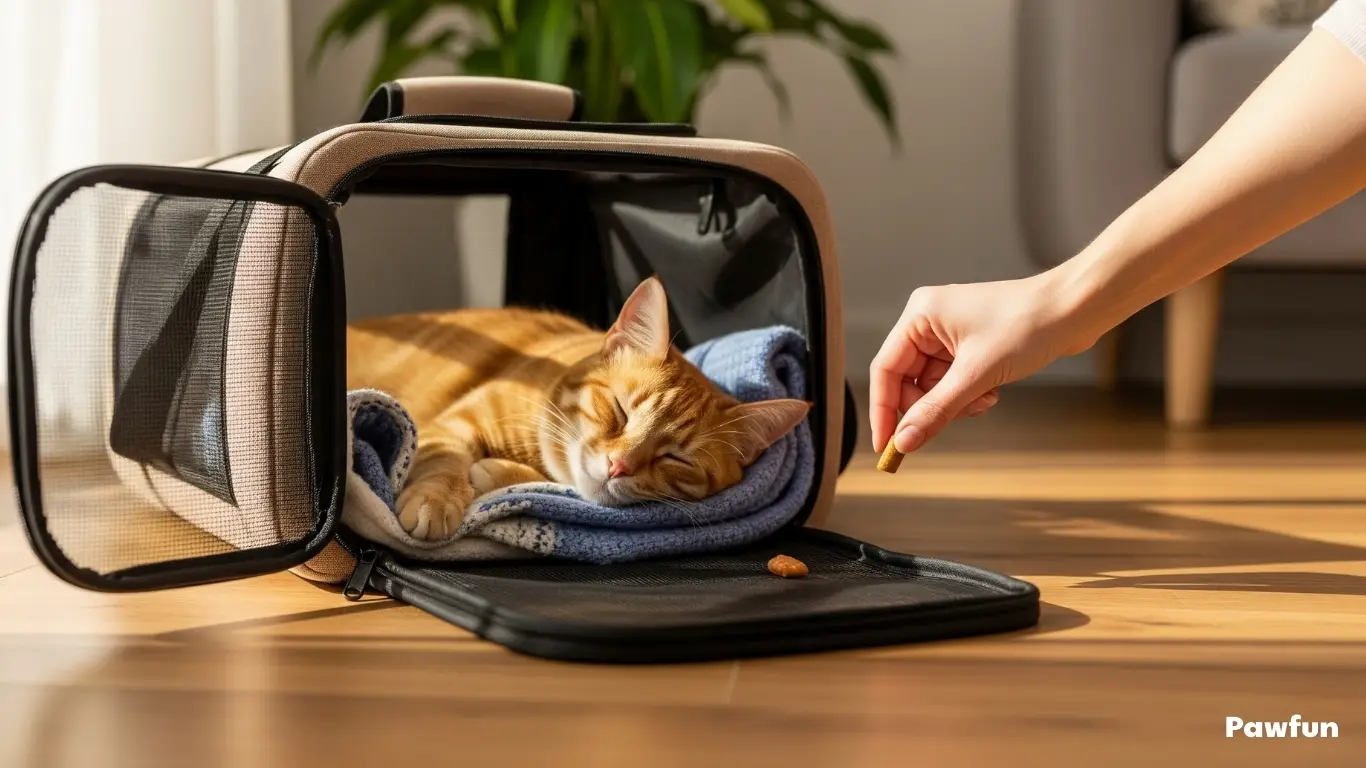
1. Make it Furniture: The biggest mistake is keeping the carrier hidden away. People often only bring it out for vet trips. Instead, leave the carrier out in your main living area. Keep the door open or even remove it. Then, let it become a normal, non-threatening part of the room.

2. Make it Comfortable: Line the inside with a soft blanket or an old t-shirt that smells like you. This is important because familiar scents are very comforting to cats.

3. Create Positive Associations: This is the fun part. First, casually toss high-value treats or a favorite toy into the carrier. Let your cat “discover” them throughout the day. Next, start feeding your cat their meals near the carrier. Eventually, you can feed them inside it.

4. Gradual Introduction to Closure: Once your cat enters the carrier willingly, you can start the next step. Begin by closing the door for just a second or two. Then, immediately open it and give them a treat. Over many sessions, you can slowly increase the time the door is closed.

5. Introduce Movement: After your cat is comfortable with the door closed, you can introduce movement. Start by gently lifting the carrier. Then, just set it back down and reward them. Next, progress to carrying them around the room. Finally, you can try short, calm rides in the car. Always make sure these trips end back at home with a reward, not at the vet.

Crisis Management: Strategies for the Anxious or Difficult Cat

If you’re in a situation where you need to get a resistant cat into a carrier now, there are a few methods that can help. Learning how to get a cat into a carrier when it is panicked is a valuable skill. The “vertical drop,” where you hold your cat and lower them rear-first into a top-loading carrier, is often effective. The “towel burrito” method, where you gently wrap your cat in a towel to control their limbs before placing them inside, can also work.

However, these are workarounds. The real solution is to have a carrier with a better design, such as a top-loading cat carrier or one with a removable top, which prevents this struggle in the first place. For cats with severe anxiety, it’s wise to speak with your veterinarian. They may recommend calming aids, such as a synthetic pheromone spray (Feliway), to be applied in the carrier 30 minutes before travel, or even prescription anti-anxiety medication like gabapentin for particularly stressful journeys.

You can learn more information to have a safe and fun trip with your cat through the article: How to Travel with a Cat: 21 Practical Tips for a Happy and Joyful Adventure

Now that you are equipped with the expert knowledge to select the correct type of carrier and use it safely for any journey, let’s address some specific questions that can help solidify your decision and tackle common challenges.

Answering Your Key Questions

(Definitional) What does “CPS Crash-Tested” actually mean for a cat carrier?

This is an excellent question because it cuts through marketing jargon. “CPS Crash-Tested” means that the Center has independently tested a cat carrier for Pet Safety (CPS) and has passed a rigorous collision test simulating a real car crash. It’s not just a marketing claim; it’s an objective, third-party certification that the carrier is structurally sound and will provide protection for your pet in the event of an accident. Brands like the Sleepypod cat carrier and Tavo have built their reputations on achieving this certification, which functionally turns their products into pet car seats.

(Comparative) How do premium carriers (150+) justify their cost compared to budget options (<50)?

I understand the hesitation to spend a lot on a cat carrier, but with premium models, you’re paying for quantifiable features, not just a brand name. Here’s the breakdown:

  • Budget Tier (<$50): Provides basic containment. It often uses lower-quality plastic that can crack, flimsy zippers that can break, and basic mesh that can be torn. There is no verified safety testing. It gets the job done for a calm cat on a short, infrequent trip, but it’s a gamble.
  • Premium Tier ($150+): The higher price is justified by concrete safety and durability features. You’re paying for CPS crash-test certification, superior materials (ballistic nylon, self-locking YKK zippers), multi-functionality (some, like the Sleepypod cat carrier, can be a carrier, car seat, and bed in one), and thoughtful design elements like top-loading doors and plush, washable interiors. Programs like the Sherpa Cat Carrier “Guaranteed On-Board” also provide a form of financial insurance and peace of mind. You’re investing in safety, durability, and a less stressful experience. Some durable models, like a sturdy cat carrier, also fall within this range, known for their robust construction.

(Grouping) What are the essential features of a cat with severe travel anxiety?

For a highly anxious cat, the goal is to create a secure, dark, and quiet space. You should prioritize the following features:

  • Sturdy Construction: A hard-sided cat carrier often makes anxious cats feel more secure and protected than a soft one.
  • Reduced Visibility: Look for a carrier with solid sides or one that has privacy flaps that can be rolled down over the mesh windows. This limits visual stimuli that can be overwhelming.
  • An Escape-Proof Cat Carrier: Security is paramount. This means metal hardware on a hard carrier and high-quality, lockable zippers on a soft one.
  • Snug Sizing: Ensure the carrier is sized correctly using the “1.5x Rule.” The snug, den-like interior will prevent them from being jostled and make them feel more secure.

(Boolean) Are backpack carriers with “bubble” windows a safe choice for most cats?

While the cat backpack is trendy and convenient for the owner, veterinary experts often advise against them, especially the “bubble” window models. Here’s the practical reality: many of these backpacks are too small for an average-sized cat to stand or turn around in, which is a key welfare requirement. Ventilation can be poor, leading to overheating, and the constant, unstable motion of being on someone’s back can be highly stressful and disorienting for a cat. For genuine safety and comfort, traditional carrier designs are almost always the superior choice.

Avoiding Common Pitfalls: The Risks of an Inappropriate or Poorly Used Carrier

By now, you know how to make an excellent choice. This guide aims to empower you to avoid common mistakes that can lead to dangerous situations. Using the wrong cat carrier or misusing the right one introduces three primary risks:

  1. The Risk of Escape: This is the most immediate danger, caused by cheap materials (flimsy zippers, brittle plastic latches) or poor design. A panicked cat can and will exploit any weakness. Choosing a carrier with secure locking mechanisms is your first line of defense.
  2. The Risk of Injury in Transit: This risk comes from two main failures: improper sizing (a carrier that’s too large allows the cat to be thrown around inside) and, most critically, failing to secure the cat carrier in a vehicle properly. An unsecured carrier poses a safety hazard to every passenger in the car.
  3. The Risk of Escalating Stress: Every negative experience with a carrier makes the next one harder. Failing to acclimate your cat to the carrier properly creates a powerful negative feedback loop, leading to a cat that panics at the mere sight of it. This turns every future vet visit or necessary trip into a traumatic event for both of you.

how-to-travel-with-a-cat
Jul 18

How to Travel with a Cat: 21 Practical Tips for a Happy and Joyful Adventure

By Jessica Monroe | How-To & Tips

How to Travel with a Cat is a question that fills most pet owners with anxiety. Let’s be honest: the thought of bundling your routine-loving cat into a carrier can be daunting. Unlike dogs, cats are creatures of habit. Uprooting them from their comfortable kingdom is a significant challenge.

I’ve been there. My first road trip with my cat was a disaster because I thought a comfy blanket was enough. I was wrong.

I quickly learned that successful travel with a cat isn’t about luck—it’s about thoughtful planning. That’s precisely why this guide exists: to walk you through everything you need to know, turning potential stress into a positive experience. After all, good preparation is the key to a safe, comfortable, and memorable journey for both of you.

Chapter 1: Essential Pre-Travel Preparations

Before you even think about packing your bags, the most critical phase of your journey begins. Proactive preparation is the foundation of successful cat travel. This chapter covers the non-negotiable first steps: ensuring your cat is healthy, legally cleared for travel, and comfortable with the one thing that will become their mobile sanctuary—the carrier.

How to travel with a cat 01

1.1. A Critical Step in How to Prepare a Cat for Travel: Veterinary Consultation & Health Documentation

Your first stop should always be your veterinarian’s office, ideally several weeks or even months before your trip. This is especially true if you’re planning on how to travel internationally with a cat. A pre-travel check-up is non-negotiable. It assesses your cat’s overall health and ensures they are fit for the journey. This is also the time to discuss any anxieties your cat may have, a vital topic when considering how to keep a cat calm on a plane or in a car.

Identification is Key:

  • Microchip: Ensure your cat has an ISO-compliant microchip, which is the global standard for identification. For international travel, the microchip must be implanted before the rabies vaccination.
  • ID Tag: A sturdy collar with an ID tag is a crucial backup for your current contact information.

Documentation Checklist:

  • Domestic Travel: Most states and airlines require proof of a current rabies vaccination and a recent health certificate (also known as a Certificate of Veterinary Inspection or CVI), typically issued within 10 days of travel.  We break down this entire process in our detailed guide on how to get a health certificate for your cat.
  • International Travel: This is far more complex. For this reason, you’ll need an accredited USDA veterinarian to help you navigate country-specific requirements, which can include USDA endorsement, specific tests, and import permits. It’s vital to get this right, as non-compliance can result in denied entry or a lengthy, expensive quarantine.

Finally, this vet visit is the perfect time to discuss anxiety. I cannot stress this enough: if your vet prescribes a medication, you must do a trial run at home first. This is a crucial step in preparing a cat for travel and avoiding surprises during the actual journey.

1.2. Carrier Acclimatization & Training

Think of the carrier not as a cage but as your cat’s mobile sanctuary. Getting this part right is fundamental to knowing how to get a cat in a pet carrier without a fight, which is a common challenge for pet owners.

Choosing the Right Carrier:

  • How big should a cat carrier be? Your cat must be able to stand up, turn around, and lie down comfortably. Additionally, the carrier itself should be well-ventilated, secure, and leak-proof.
  • Soft vs. Hard-Sided: Soft-sided carriers are often preferred for how to fly with cat in cabin because they offer some flexibility for fitting under a seat. Hard-sided carriers offer more protection and are usually required for cargo travel, or can be safer for car trips.
  • Crash-Tested Carriers: For car travel, consider a carrier certified by the Center for Pet Safety (CPS). However, if your carrier isn’t crash-tested, the safest place for it is on the floor behind a front seat.

Choosing the right carrier is the most critical first step. For a deep dive into the pros and cons of different models and our top recommendations, explore our complete guide: Cat Carrier: The 1 Ultimate Guide to Choosing a Safe & Comfortable Carrier for Your Cat.

Acclimatization Process:

  1. Leave the carrier out in your living space with the door open for weeks before your trip. Let it become a normal piece of furniture.
  2. Place treats, favorite toys, or a comfy bed inside to create positive associations.
  3. Once your cat is comfortable going inside, practice closing the door for a few seconds, then gradually increase the time spent with the door closed. Always reward with a treat.
  4. Spray a calming pheromone, such as Feliway, inside the carrier 15-30 minutes before use.
  5. Start with practice trips: first in a stationary car, then with the engine on, and finally on short drives to build tolerance for a successful road trip with a cat.

1.3. The Ultimate Cat Travel Packing List

A well-organized travel kit provides comfort and is your best defense against unexpected delays, a vital part of planning how to travel with cats.

While we’ve summarized the key categories below, we dive deep into every essential item in our dedicated guide. For a complete, printable checklist with pro tips on what to choose, explore our full Cat Travel Packing List: 6 Essential Categories for a Seamless Trip.

Packing familiar items is a key strategy for ensuring a smooth transition, because the ultimate goal is to create a small bubble of “home” that travels with your cat.

Chapter 2: Navigating Different Modes of Transportation

Once preparations are complete, it’s time to hit the road, rails, or sky. Each mode of transport presents a unique challenge for those learning how to travel with a cat.

How to travel with a cat 02

2.1. Car Travel: Road Trip Readiness

Car travel offers the most control, making it a popular choice for how to move a cat across country. However, even a simple journey requires a solid plan for how to travel with a cat in a car long distance.

Carrier Placement and Security:

  • The Golden Rule: Never let your cat roam free in the car. This is because a loose cat is a dangerous distraction and is at extreme risk of injury in a sudden stop.
  • Safest Location: The safest place for the carrier is on the floor behind one of the front seats. This is because the position prevents it from becoming a projectile.
  • Avoid the Front Seat: Never place a pet carrier in the front passenger seat due to the risk of airbags.

Managing Stress in the Car:

  • How to calm a cat in the car? Start with a calm environment. For example, you can cover the carrier with a light sheet (ensure good airflow), play quiet music, and keep your voice soft.
  • Medication: If your vet prescribed medication for anxiety or motion sickness, administer it as directed based on your at-home trial run.
  • Feeding: It’s best to withhold food for a few hours before you leave to minimize the chance of nausea.

Breaks and Safety:

  • On a trip involving how to travel with a cat in a car long distance, plan for breaks every 2-3 hours. Offer water at each stop.
  • CRITICAL WARNING: Never, ever leave your cat alone in a car. Temperatures can rise to deadly levels in minutes, even on a mildly warm day.

While these points cover the essentials, our dedicated guide, How to Travel With a Cat in a Car: 3 Proven Steps for a Successful Journey, breaks the entire process down into a simple, actionable plan.

2.2. Air Travel: Flying with Felines

Flying is often the most stressful mode of travel for a cat, largely due to the overwhelming combination of noise, pressure changes, and confinement. As a result, it requires the most extensive preparation. Knowing how to travel with a cat on a plane is all about following the rules of the letter.

In-Cabin vs. Cargo:

  • How to fly with cat in cabin: This is the preferred method for most owners. For this to be an option, however, your cat must be in an airline-approved carrier that fits under the seat in front of you. Keep in mind that it counts as your carry-on item.
  • Cargo: For larger cats or on certain international flights, cargo is the only option. This option carries inherent risks and is generally more stressful for the animal.

Airline Policies & Booking:

  • How to book a flight with a cat? You must book your cat’s spot in advance, as airlines limit the number of pets per flight. To do so, you typically need to contact the airline directly to add a pet to your reservation.
  • How much does it cost to fly with a cat? Fees typically range from $95 to $150 each way for in-cabin travel.

Special Considerations for Air Travel:

  • Sedation is prohibited: This is a universal airline rule. The question of how to sedate a cat for a flight has a clear answer: you don’t. Sedatives can interfere with a cat’s ability to regulate its body temperature and breathing at altitude, which can be fatal.
  • Airport Security (TSA): You will have to remove your cat from its carrier so the carrier can be X-rayed. Make sure your cat is wearing a snug-fitting harness and leash to prevent escape.

Thorough preparation is the key to a smoother flight. To dive deeper, explore our detailed guide: Flying with a Cat: 7 Essentials to Master the Skies for a Joyful Trip.

2.3. How to Travel with a Cat on a Train

For specific journeys, how to travel with a cat on a train can be a less stressful alternative to flying due to the more stable environment and less jarring noise.

Amtrak Pet Policy (U.S. Example):

  • Allowed Pets: Small cats and dogs are welcome on most routes, provided the total travel time is 7 hours or less.
  • Weight & Carrier Limits: The combined weight of your cat and its carrier must be 20 lbs or less.
  • Reservations & Fees: A pet reservation is required and costs around $29 to $39. Space is limited, so book early.
  • Rules: You must sign a “Pet Release and Indemnification Agreement,” and your cat must remain in its carrier for the entire journey.

Policies on international trains vary wildly. Therefore, you should always check with the specific train operator for their rules on how to travel with cats.

Knowing the rules is just the beginning. For a detailed strategy on how to prepare for and execute a truly calm trip, from booking to arrival, explore our complete guide: How to Travel with a Cat on a Train: Your 6-Phase Guide to a Calm Journey.

2.4. Ship Travel: Ocean Voyages (Limited Options)

Traveling by ship with a cat is rare and highly restrictive. For this reason, it is not a practical option for most pet travel and, if considered at all, should only be done after extensive research with the cruise line.

Chapter 3: Ensuring Well-being & Handling Challenges on the Go

The journey itself is dynamic. Being prepared to manage your cat’s needs in real-time is just as crucial as pre-trip planning, whether you are trying to figure out how to move a cat across country or just on a short flight.

How to travel with a cat 03

3.1. Stress & Anxiety Management During Travel

Minimizing stress is your top priority. After all, a calm cat makes for a quiet trip, and this principle is especially crucial when learning how to keep a cat calm on a plane or in a car.

Non-Medical Calming Aids:

  • Pheromones: Feliway spray or wipes can be applied to the carrier and bedding to mimic calming feline facial pheromones.
  • Calming Vests: Products like the Thundershirt apply gentle, constant pressure, which can have a calming effect on anxious pets.
  • Familiar Scents: An unwashed t-shirt or a favorite blanket provides a powerful sense of security.

Vet-Prescribed Medications for Anxiety:
When non-medical aids aren’t enough, your vet may prescribe medication. This is a key part of how to calm a cat in the car for severe cases.

Remember the golden rules: always perform a trial run at home to check for side effects, and never use sedatives for air travel.

These are the core strategies. To learn how to build them into a detailed, phase-by-phase plan, check out our complete guide: How to Keep Cat Calm During Travel: 4 Essential Phases for a Peaceful Journey.

3.2. Maintaining Routine & Hygiene

  • Feeding and Hydration: Offer small amounts of water during breaks. A full meal is best saved for when you arrive at your destination for the day.
  • Litter Box: For a long road trip with a cat, a portable litter box is a must. Knowing how to travel with a cat litter box means being prepared with a small, accessible option for breaks.
  • Accidents Happen: Accidents are bound to happen, so it’s best to be prepared. For starters, line the carrier with absorbent puppy pads. It’s also a good idea to keep paper towels, pet-safe wipes, and plastic bags on hand for quick cleanups.

3.3. Emergency Preparedness & Veterinary Care Away From Home

  • Locate Vets in Advance: Before you leave, create a list of emergency veterinary hospitals along your route and at your destination.
  • Know Your Resources: Save your regular vet’s number for emergencies. Also, consider a 24/7 pet helpline service.
  • Pet Insurance: If you don’t already have it, pet insurance can be a financial lifesaver for emergency vet costs on the road.

3.4. How to Find Pet-Friendly Accommodations

“Pet-friendly” doesn’t always mean “cat-friendly.” Therefore, the final step in your planning is determining how to find pet-friendly accommodations that genuinely welcome cats.

  • Call Ahead: Always call the hotel directly to confirm they accept cats and to ask about any specific fees or restrictions.
  • Use Specific Resources: Websites and apps like BringFido, PetsWelcome, and GoPetFriendly are designed for this.
  • Cat-Friendly Hotel Chains: Kimpton Hotels are famously pet-friendly with no extra fees. La Quinta, Motel 6, and many Best Western locations also tend to have welcoming policies.
  • Once you arrive, keep your cat confined in the bathroom initially to allow them to acclimate. Conduct a thorough sweep of the room to identify any potential hazards.

These tips are a great starting point. But to move beyond the basics and learn the nine insider secrets to vetting a truly blissful retreat for your cat, dive into our detailed guide: Cat Friendly Hotels: Unlock the 9 Insider Secrets to Vetting a Genuinely Blissful Retreat.

3.5. Anticipating & Overcoming Unexpected Delays

Travel is unpredictable. A plan for delays is part of a good travel plan.

  • Common Causes: Several factors can cause delays. For instance, these include weather (such as airline temperature embargoes), an incorrectly sized crate, or missing paperwork.
  • Pack a Buffer: Always pack several extra days’ worth of your cat’s food, water, and any necessary medications. This is your single best defense against delays.
  • Stay Flexible: Cultivate patience. Have a backup plan in mind, whether it’s an alternate route or a list of pet-friendly hotels near the airport.

Conclusion: A Rewarding Journey for You and Your Cat

Traveling with your feline friend can seem like a monumental task, but it is absolutely achievable. Success hinges on a single principle: proactive and thorough preparation. By consulting your vet early, taking the time to acclimate your cat to their carrier, understanding the specific rules of your travel mode, and packing for every contingency, you transform a potentially anxious event into a manageable—and even enjoyable—adventure. This journey is about more than just getting from one place to another; it’s about extending the comfort and love of home every step of the way, strengthening the incredible bond you share with your pet.

Supplemental Content: Beyond the Basics – Deeper Insights

S.1. Is it always better to travel with my cat, or are there times when leaving them at home is safer?

This is a critical question. For a highly anxious, elderly, or chronically ill cat, the stress of travel may outweigh the benefit of having them with you. A trusted pet sitter is often the kindest option. This also applies when considering how to travel with multiple cats; if one is a confident traveler and the other is terrified, it may be better to arrange for the anxious one to stay at home.

S.2. What are the subtle signs of stress in a cat during travel that owners often miss?

Beyond hissing or growling, look for more subtle cues, such as excessive grooming, lip-licking, dilated pupils, flattened ears, or a low, mournful meow that differs from their usual vocalizations.

S.3. How do airline pet policies for cats compare to those for small dogs?

For the most part, they are identical. In-cabin size and weight limits, fees, carrier requirements, and the ban on sedation apply equally to both small dogs and cats.

S.4. Can a cat truly be “leash-trained” for travel, and what are the benefits and risks?

Yes, some cats can be trained to walk on a harness and leash. However, it’s crucial to weigh the benefits against the risks. On the one hand, the benefit is the ability to have a supervised stretch. On the other hand, the risk is significant, as an unfamiliar environment can easily spook a cat, leading to escape. For this reason, you should only attempt this if your cat is already 100% comfortable in a harness at home.

S.5. What are the long-term psychological impacts of stressful travel experiences on cats?

A single, highly traumatic travel experience can have lasting effects. It can create a permanent fear of cars. This is why making the first few travel experiences as positive and low-stress as possible is crucial, especially when you travel with a kitten.

May 11

12 Must-Have Pet Travel Essentials for Safe and Happy Adventures

By Jessica Monroe | How-To & Tips

Traveling with your pet is an exciting adventure, but without proper planning, it can turn stressful—for both you and your furry friend. Whether you’re hitting the road for a weekend getaway or flying across the country, having the right pet travel essentials is key to a smooth experience. In this comprehensive guide, we’ll walk you through everything you need to ensure your pet’s safety, comfort, and happiness while on the move.

Why Pet Travel Essentials Matter

Pet travel essentials are more than just a checklist—they’re a commitment to your pet’s well-being. Pets are creatures of habit, and sudden changes in environment, routine, or comfort can lead to anxiety, illness, or even injury. Proper gear can make all the difference in how your pet copes with travel.

pet travel essentials

1. Secure Travel Carrier or Crate

A high-quality, airline-approved pet carrier is a non-negotiable item. Look for carriers with ample ventilation, soft bedding, and a secure latch system. If you’re flying, make sure it complies with IATA standards.

Tip: For road trips, a crash-tested pet crate provides maximum safety and minimizes distractions.

2. Adjustable Harness and Safety Leash

Your regular leash might not cut it when you’re navigating busy airports, crowded rest stops, or new hiking trails. Invest in a durable harness that offers better control and evenly distributes pressure across your pet’s chest.

Pair it with a reflective leash or one with a shock absorber if you expect sudden pulls.

3. Collapsible Food and Water Bowls

Space-saving and lightweight, collapsible silicone bowls are perfect for travel. Choose BPA-free materials and keep an extra set in your car or backpack for hikes or emergency stops.

Pro tip: Bring bottled water or filtered water from home to avoid upsetting your pet’s stomach.

4. Pet ID Tags and Microchip Info

Make sure your pet wears updated ID tags at all times, especially in unfamiliar places. Include your cell phone number and consider a tag that states “Microchipped.”

It’s also a good idea to carry a printed copy of your pet’s microchip registration and vet records.

5. Comfort Blanket or Familiar Toy

New environments can be overwhelming. A blanket or toy that smells like home helps ease anxiety. It serves as a source of comfort during long drives, hotel stays, or flight delays.

6. Pet First Aid Kit

Accidents can happen on the road. Prepare a compact first aid kit with:

  • Tweezers and scissors
  • Gauze pads and tape
  • Hydrogen peroxide (to induce vomiting—only under vet advice)
  • Antiseptic wipes
  • Your pet’s prescription medications

7. Waste Bags and Travel Litter Box

Don’t forget the clean-up! Always carry biodegradable poop bags for dogs or a compact, disposable litter box for cats. Being a responsible pet traveler keeps public places clean and helps preserve pet-friendly access.

8. Travel-Friendly Pet Food and Treats

Bring enough food for the entire trip, plus a few extra days in case of delays. Stick to your pet’s regular brand to avoid gastrointestinal upset.

Keep a few healthy treats handy to reward good behavior or calm nervous energy during transitions.

9. Calming Aids or Supplements

If your pet is prone to anxiety, consult your vet about travel-safe calming solutions. Options include:

  • CBD drops or chews (check local laws)
  • Pheromone sprays
  • Calming vests or shirts
  • Natural herbs like chamomile or valerian

10. Pet Travel Documents

Some destinations require proof of vaccinations, health certificates, or permits. If you’re crossing borders or flying, research the legal requirements and prepare your documents in advance.

Include copies of:

  • Rabies vaccination
  • General health certificate (within 7–10 days of travel)
  • Import permits (if applicable)

11. GPS Pet Tracker

Technology can provide peace of mind. A GPS-enabled collar lets you track your pet in real time if they get lost or wander off. Choose one with a long battery life and nationwide coverage.

12. Travel Insurance for Pets

Consider purchasing pet travel insurance, especially for international trips. It can help cover emergency veterinary care, cancellations, or lost pet claims.

Bonus: Pet-Friendly Apps

Download pet travel apps that show pet-friendly hotels, parks, rest stops, and emergency vets. Some top-rated options include:

  • BringFido
  • AllTrails
  • Pet First Aid by American Red Cross

Final Thoughts

Pet travel doesn’t have to be stressful. With the right pet travel essentials, you’ll be well-equipped to handle any hiccups along the way and ensure your furry companion enjoys the journey as much as the destination.

flat lay photography of camera, book, and bag
Apr 30

How to Get a Pet Health Certificate for Travel: 7 Steps Every Owner Must Know

By Jessica Monroe | How-To & Tips

If you’re planning to travel with your dog or cat—by air, land, or sea—you’ll likely need an official document that proves your pet is healthy and up-to-date on vaccinations. In this guide, you’ll learn exactly how to get a pet health certificate for travel so you can meet airline, border, and accommodation requirements without stress or confusion.

This process may seem complicated, but with the right information and a clear checklist, it’s entirely manageable. Let’s walk through the steps every pet owner should follow to get their certificate on time.

How to get a pet health certificate for travel

What Is a Pet Health Certificate?

A pet health certificate (also called a Certificate of Veterinary Inspection or CVI) is an official document issued by a licensed veterinarian that confirms your pet is healthy and vaccinated. It’s typically required by:

  • Airlines (both domestic and international)
  • State or country border authorities
  • Pet-friendly accommodations or travel services

For international travel, the certificate must often meet additional requirements, depending on the destination country.

Why Do You Need a Pet Health Certificate?

Traveling with a pet without proper documentation can lead to:

  • Denied boarding by airlines
  • Delays at customs or border checkpoints
  • Mandatory quarantines
  • Fines or refusal of entry

A valid certificate ensures your pet isn’t carrying contagious diseases and is fit to travel safely.

How to Get a Pet Health Certificate for Travel (Step-by-Step)

1. Check Destination Requirements

Before anything else, research what your destination (state or country) requires for incoming pets. Use official sources like:

  • USDA APHIS Pet Travel (for international trips)
  • Your airline’s pet policy page
  • The destination country’s embassy website

Each place may have different rules on vaccination timing, microchipping, or parasite treatments.

2. Book a Vet Appointment With a USDA-Accredited Veterinarian

Only USDA-accredited veterinarians can issue valid health certificates for international travel. You can find one in your area using the USDA vet locator. Make sure your vet:

  • Knows the exact destination and travel date
  • Has experience preparing travel certificates
  • Can complete all required treatments and documentation

3. Complete Required Exams and Vaccinations

Your pet will need a physical exam (usually within 10 days of travel) and proof of:

  • Rabies vaccination
  • General health (no signs of illness)
  • Other vaccines depending on destination (e.g., DHPP, Bordetella)
  • Flea/tick or parasite prevention if required

Get original vaccine records and ensure all documentation is complete and signed.

4. Microchip Your Pet (If Required)

Many countries require pets to be microchipped before their rabies vaccine. Make sure the microchip is ISO-compliant and registered with your contact details. Bring microchip documents to your vet visit.

5. Have the Vet Complete and Sign the Certificate

Your vet will fill out the APHIS Form 7001 (for domestic travel) or the correct country-specific form. Double-check that:

  • All entries are typed and accurate
  • Signatures and stamps are included
  • Dates are correct (especially travel date vs. exam date)

6. Get USDA Endorsement (for International Travel)

For international trips, you may need to send the signed certificate to a USDA APHIS office for official endorsement. This step may be:

  • Done in-person (by appointment)
  • Completed via overnight mail or online (depending on region)

Make sure to allow several business days for processing.

7. Bring the Certificate During Your Trip

Always carry the original paper copy with you. Do not rely on digital versions unless explicitly accepted. Airlines may check it at boarding, and customs may ask for it upon arrival.

Tips to Avoid Certificate Delays

  • Schedule the vet visit at least 2 weeks before departure
  • Pre-fill any known information on the forms
  • Triple-check travel dates and pet info (name, breed, age, etc.)
  • Use a folder to store all documents, including airline forms, vaccination proof, and microchip data

How Long Is a Pet Health Certificate Valid?

  • Domestic Travel (U.S.): Usually valid for 30 days
  • International Travel: Often valid for 10 days or less from issue to entry

Always confirm with the airline and country-specific guidelines.

What Happens If You Don’t Have One?

Without a health certificate, your pet may:

  • Be denied boarding at the airport
  • Face quarantine at arrival
  • Be sent back to the country of origin
  • Be separated from you during travel

Planning ahead protects both your travel plans and your pet’s health.

Conclusion

Knowing how to get a pet health certificate for travel is one of the most important steps you can take before your trip. It ensures your pet is healthy, documented, and ready for a smooth journey—whether you’re flying across the country or moving abroad.

If you’re unsure, always speak to a USDA-accredited vet well in advance. With the right preparation, your next adventure with your pet will be safe, compliant, and worry-free.


How to Choose a Pet Travel Insurance Plan
Apr 24

How to Choose a Pet Travel Insurance Plan: The 2025 Guide for U.S. Pet Owners

By Jessica Monroe | How-To & Tips

Traveling with pets is more popular than ever. Whether you’re planning a weekend road trip or an international vacation, taking your dog or cat along adds joy to the journey—but also introduces new risks. From unexpected vet visits and flight delays to lost luggage or quarantine costs, pet travel comes with challenges. This is where pet travel insurance proves essential.

In 2025, more U.S. pet parents are realizing that just like human travelers, pets need protection too. This article will guide you step-by-step in choosing the right pet travel insurance plan for your travel goals, budget, and your companion’s unique needs.

What Is Pet Travel Insurance?

Pet travel insurance is a specialized form of coverage designed to protect your pet while you’re away from home. It covers specific risks associated with domestic or international trips—like illness, accidents, flight delays, or emergency boarding.

woman riding animal on dessert

It’s different from regular pet insurance, which often excludes out-of-state or out-of-country coverage. Travel insurance for pets can be a standalone policy or an add-on to an existing health plan.

Why You May Need It

You may think pet insurance is a luxury, but in many cases, it’s a smart investment—especially if:

  • You are flying with your pet and want protection against injury or loss during transit.
  • You’re traveling to a country that requires quarantines or specific veterinary documentation.
  • Your pet has health conditions that could flare up during stressful travel.
  • You’re taking part in adventure travel—like hiking or camping—where injury risk increases.
  • You’re worried about missing your trip due to a pet-related emergency.

In these scenarios, insurance can help you avoid costly vet bills and disruptions.

What Does Pet Travel Insurance Typically Cover?

Most plans include the following:

  • Emergency vet treatment while traveling
  • Accident and illness coverage outside your home region
  • Reimbursement for trip interruption if you need to cancel or cut short your trip due to your pet
  • Lost or delayed pet transport coverage
  • Quarantine expenses and required medical exams
  • Emergency boarding or foster care if you’re hospitalized

Each policy is different, so it’s essential to read the fine print.

Will Regular Pet Insurance Cover Travel?

Not necessarily. Many U.S. providers only cover treatment within state or national boundaries. If you’re traveling internationally, or even to another state for an extended period, your plan may not apply.

Some providers offer optional global coverage or travel add-ons, but these must be requested and approved in advance. Always check with your current insurer to see:

  • Whether out-of-state or out-of-country treatment is included
  • If direct payment is offered or if you must pay and get reimbursed
  • Which types of care are covered (emergency vs. routine)

If coverage is limited, you’ll want to explore standalone pet travel insurance.

Key Terms to Understand

Before you compare policies, here are a few important terms you should know:

Premium: This is the amount you pay for the policy, either monthly, annually, or per trip.

Deductible: This is the amount you’re responsible for before insurance kicks in. Lower deductibles typically mean higher premiums.

Reimbursement Rate: This refers to how much of the covered expenses the insurer will repay—often 70%, 80%, or 90%.

Coverage Limit: This is the maximum amount the insurer will pay, either per trip or annually.

Waiting Period: Some policies won’t begin coverage immediately. Make sure your trip doesn’t begin during the waiting period.

Exclusions: These are the services and situations not covered by your policy. Always review them carefully.

Factors to Consider When Choosing a Plan

When selecting a pet travel insurance policy, ask yourself the following:

What Type of Travel Are You Planning?

Domestic and international trips come with different risks. If you’re flying abroad, be sure the policy includes international veterinary care and quarantine fees. If you’re traveling by car in the U.S., the plan should still cover emergency care and trip cancellations.

What Is Your Pet’s Health Condition?

Some policies do not cover pre-existing conditions. Others may allow limited coverage for chronic illnesses. If your pet has ongoing health needs, look for plans with flexible underwriting or partial reimbursement options.

How Long Will You Be Traveling?

Short-term coverage is usually designed for trips lasting a few days to a month. If you travel frequently or plan to be away for longer periods, consider an annual plan with multiple trip coverage.

Will You Have Access to Veterinary Care?

Check whether the plan allows you to visit any licensed vet worldwide, or if you’re restricted to a network. The best plans allow global vet access, while some premium policies include 24/7 vet teleconsultation to help guide you from abroad.

Do You Need Additional Travel Perks?

Some insurance plans go beyond health coverage. You might benefit from features like:

  • Reimbursement for non-refundable hotel or flight bookings if your pet becomes ill
  • Lost pet recovery support
  • Emergency boarding for your pet if you are hospitalized
  • Legal or liability coverage if your pet causes harm abroad

Real-Life Example: Lucy the Traveling Labrador

Lucy’s owners took her along on a two-week trip to France. On day four, she developed a serious allergic reaction after eating unfamiliar food at a rest stop. The emergency vet visit cost nearly $800, and the owners had to extend their hotel stay.

Their pet travel insurance reimbursed the medical bill, hotel change fees, and provided them with a vet hotline they could call during the remainder of the trip. Without the policy, they would’ve paid over $1,200 out of pocket.

What Coverage Should You Prioritize?

To help narrow your options, here are the most critical elements of pet travel insurance:

  1. Emergency medical coverage for accidents and illness
  2. Trip interruption or cancellation due to pet-related issues
  3. Coverage for airline or transport delays
  4. Reimbursement for quarantine or denied entry issues
  5. Access to global veterinary care
  6. Reimbursement speed and reliability

If a plan doesn’t offer these core features, it’s likely not worth your time or money.

Common Mistakes to Avoid

Don’t wait until the last minute. Most policies have a waiting period, and you risk not being covered if you buy too close to your departure date.

Don’t ignore exclusions. Many plans exclude dental, elective, behavioral, or breed-specific issues.

Don’t assume your regular vet insurance covers everything. It often doesn’t include anything outside your region, especially airline-related issues.

Don’t choose based on price alone. The cheapest plan may have high deductibles or poor customer service.

How Much Does Pet Travel Insurance Cost?

Costs vary based on your pet’s age, breed, health condition, travel location, and trip length. On average:

  • Domestic trip coverage costs between $15 and $25
  • International single-trip policies range from $30 to $75
  • Annual multi-trip coverage can range from $100 to $300 per year

While this is an extra expense, the protection it offers—especially for medical emergencies—often pays for itself.

Where to Find Pet Travel Insurance

Some major pet insurance companies now offer travel-specific coverage or optional travel add-ons. Others may refer you to a third-party travel insurance provider that includes a pet clause. If you already use a pet insurer, call and ask about their travel policies. If not, search online for travel insurance plans that include coverage for pets.

When evaluating providers, look for:

  • Strong customer reviews
  • Transparent policy documents
  • U.S.-based customer support
  • Clear reimbursement procedures
  • Optional add-ons or upgrades for travel

Before You Buy: Pre-Trip Checklist

To get the most from your plan, make sure you:

  • Buy the policy at the time of booking or as early as possible
  • Get a health certificate from your vet before departure
  • Print or save digital copies of all documents (policy, vet records, vaccination proof)
  • Pack your pet’s ID tags, microchip info, and insurance details in your travel bag
  • Read the full policy to understand what’s covered and excluded

Being prepared ensures no surprises if you need to make a claim during your trip.

Conclusion: Smart Travel Starts with Coverage

Pet travel is one of life’s greatest joys—but it’s also full of unknowns. From sudden illnesses to transport mix-ups, you can’t always control what happens, but you can plan for it.

Choosing the right pet travel insurance plan gives you peace of mind. It ensures that if the unexpected strikes, your pet will be cared for and you won’t face financial strain. Whether you’re flying across the world or just crossing state lines, a few extra dollars now can save you hundreds—or even thousands—later.

Take a moment to assess your travel plans, your pet’s health, and your budget. Then choose a travel insurance policy that lets you both explore with confidence.

orange tabby kitten in grasses
Apr 24

Travel-Friendly Pet Bowls: Top 5 Collapsible Picks for Stress-Free Road Trips

By Jessica Monroe | Reviews

Traveling with your pets can be a wonderful adventure, but that adventure is also accompanied by a host of special challenges—chiefly in relation to their eating equipment. Old-style pet bowls are clunky and inconvenient and will be hard to stow in the boot of a car loaded up with bags and the like. It is at these times that the collapsible pet bowl becomes most useful, presenting a sensible and convenient answer to both space shortage and inconvenience.

The Problems of Pet Travel and Pet Feeding Devices

When you embark on the journey down the road with your pet, ensuring that they are supplied with what they require is of the essence. Food and water to bowls, it appears to be having additional baggage in tow! Having their feeding equipment under control without overcrowding your car is vital. Ordinary bowls weigh a lot and occupy space that can be used for other equipment or, most likely, additional treats for your pet.

man in black wetsuit carrying white surfboard walking on beach during daytime

The Space-Saving Advantages of Collapsible Bowls for Car Travel

Collapsible bowls are particularly good in this area, as they easily fold up to a fraction of their original size. This means they will slip nicely into your glove compartment or backpack without taking up precious space. Whether traveling on a weekend getaway or a longer excursion, having lightweight, portable bowls eliminates the hassle of cramped quarters.

How Portable Pet Bowls Assist in Creating a Stress-Free Travel Experience

Much of the fun of a road trip is getting your pets comfortable and happy. Collapsible bowls ensure that feeding on the run is a breeze, so you can hand out meals or snacks wherever you are. Having immediate access to food and water keeps your pet relaxed and happy, and that’s what makes for effortless travel. Plus, they’re simple to clean and refill, so you can focus on making memories instead of messes.

Keeping these points in mind, choosing a good travel-friendly pet bowl is easier. The following section will discuss in greater detail what precisely to look for while selecting the ideal bowl for your next travel experience.

What to Look for in a Travel-Friendly Pet Bowl

When choosing the perfect bowl for your furry traveling companion, there are several things that you need to consider. You need a bowl that not only serves your pet’s needs but also makes your trip as hassle-free as possible. The below are the primary features that you need to consider.

Key Features: Durability, Collapsibility, and Ease of Cleaning

Durability: A car travel-compatible bowl must withstand road-trip conditions. Get products that can withstand wear and tear if your pet chews or has accidents.

Collapsibility: This feature will come in handy when conserving car space. Choose those that are easily foldable and into tight spaces without sacrificing usability in shape form.

Ease of Cleaning: After a long day of driving, the last thing you want is a troublemaker during feeding time. Choose bowls that are dishwasher-safe or easy to wash with soap and water quickly. Non-porous materials like silicone or certain plastics are usually easy to clean.

Size Considerations Based on Your Pet’s Needs

It is essential to have the correct size. A bowl that is too small may leave your pet hungry or thirsty, and a bowl that is too large may lead to spills and messes. Consider your pet’s size and breed:

Small Breeds: Use bowls that can hold approximately 1-2 cups of food or water.

Medium Breeds: A capacity of 2-4 cups is generally sufficient.

Large Breeds: Larger canines may need 4+ cup bowls in order to stay hydrated and nourished during travel.

Material Safety and Environmental Impact

Safety of your pet comes first. Choose a bowl that is made of food-grade, non-toxic materials. Also, think about the eco-friendliness of the materials. Stainless steel and BPA-free plastics are safe for your pet and more eco-friendly than regular plastic.

By remembering these characteristics, you’ll be half way towards choosing a collapsible bowl that suits your needs as well as your pet’s. As we move further with our top picks, you’ll get to see options for different travel situations and tastes.

people seating in vehicle

Our Top 5 Collapsible Bowl Picks

Choosing the most appropriate collapsible bowl for your pet makes all the difference on your road trip. With too many bowls to choose from, you need to have a concise review process to help guide you on the top-rated bowls. Here, we will discuss our top five based on their exceptional features, benefits, and prices.

Detailed Review Process

Our choice was informed by several major factors to ensure that we recommend only the best collapsible bowls for your travels:

Durability: We examined the materials used in each bowl to determine if they would survive trips and travel without incurring major damage.

Collapsibility: Each bowl was also tested for simplicity of collapse and storage to make handling convenient during travel.

Ease of Cleaning: One of the biggest pluses is how easy every bowl is to clean, especially when you’re short on time.

Size Options: We looked to see if the bowls come in a variety of sizes suitable for a variety of pets, as their needs can be quite varied.

Material Safety: Safety first, so we looked for eco-friendly, non-toxic materials that are safe for pets.

Detailed Analysis of Each Bowl

All-Rounder Champion: This bowl is the perfect mix of durability and functionality. With a huge capacity to hold food or water, it’s the perfect choice for long trips.

Budget-Friendly Option: Despite being budget-friendly, this bowl doesn’t hold back on quality. Its strength ensures that it lasts longer compared to some of the pricier alternatives, making it an intelligent choice for budget travelers.

Ultra-Compact Design: This pick takes the cake when it comes to portability. Its clever folding mechanism ensures it will fit nicely into your pocket or backpack, perfect for space lovers.

Dual-Purpose Wonder: Multitasking in its finest form, this bowl can contain food and water or even serve as a storage vessel. Perfect for those impromptu road trip moments.

Premium Pick: If you’re willing to spend extra, this bowl has luxury materials that increase longevity. It’s meant for pet owners who would do anything for their pets.

Price Point Comparisons

Pricing comes into play when it comes to picking the best bowl. Here’s a quick overview of what you get for each choice:

All-Rounder Champion: Mid-tier pricing, true to its premium qualities.

Budget-Friendly Option: Extremely cheap, perfect for travelers on a budget.

Ultra-Compact Design: A bit pricier due to its new design but not unaffordable.

Dual-Purpose Wonder: Reasonably priced, considering its multi-faceted nature.

Premium Pick: High in price, deservedly so due to the quality and materials used.

By learning the unique features and prices of these collapsible bowls, you can make an informed decision that is suitable for both your use and for your pet. Let us proceed to particular models, with a keen eye on what makes each different.

The All-Rounder Champion

For traveling with your precious pets, the All-Rounder Champion collapsible bowl is one of the best.

Standout Features and Design Elements

This bowl is designed with functionality as well as convenience in mind. Its sturdy construction ensures durability, making it perfect for pets of all sizes and ages. With the ability to hold enough food or water for long trips, it’s perfect for those long excursions. Additionally, its collapsible design ensures that it’s easy to store, taking up perfectly in your bag without taking up too much space.

The bowl also has non-slip bottoms to prevent any mess during feeding times, which is important in keeping the vehicle clean. Moreover, the bright colors available not only add a fun factor but also make it easily identifiable among your travel accessories.

Pros and Cons Based on Real-World Testing

Real-world testing highlights some of the strengths and weaknesses of the All-Rounder Champion:

Pros:

Excellent durability that withstands wear and tear.

Roomy size that accommodates various pet breeds.

Easy to clean, either by hand or in the dishwasher.

Lightweight design for convenient carrying around.

Cons:

Though budget-friendly, it is slightly more costly than low-cost models.

Some found that the bowl could be enhanced with a simpler folding locking mechanism.

Best Pet Size and Travel Situations

This bowl is ideal for medium and big animals but will also fit smaller ones comfortably. It performs exceptionally well in various travel scenarios, ranging from a camping trip to visiting friends or simply driving to your local park. Its versatility makes it a must-have accessory for all pet owners who desire to keep their pet well-hydrated and fed on the move.

Before you go out to explore more options, remember that each bowl has its own merits specifically tailored to different situations and requirements.

When traveling with your pet, not every pet parent is in the mood to spend an arm and a leg on equipment. Say hello to the budget-friendly collapsible bowl—the perfect solution for those who want to stay on the low end without sacrificing quality. This option is practical and designed with both functionality and affordability in mind.

Value Proposition

The inexpensive collapsible bowl provides a lot—literally! While it may be cheaper, many of these bowls are still quite durable and easy to use. They are usually made of lightweight material that can withstand wear and tear, which makes them ideal for leisurely trips or day outings.

Affordability: You don’t need to spend a fortune to provide your pet with a stable feeding source.

Functionality: Designed to be folded and cleaned easily, the bowls are rapidly stored away after use.

Durability and Functionality

While they are cheap, some of these bowls are surprisingly durable. They usually have reinforced edges and tough silicone or plastic that will last through daily use.

Lightweight: Easy to carry around, they will not add unwanted bulk to your luggage.

Easy Cleaning: They are primarily dishwasher safe or readily rinsed out, which is a requirement if you’re on the move.

Where It Excels

So, where does this budget option shine compared to pricier alternatives?

Simple design: Its uncomplicated design is a breeze to operate, making it perfect for quick meals at pit stops.

Convenient Storage: These bowls will generally fold down to a small size, easily fit into any pocket or bag, and are therefore particularly handy for short excursions or casual outings with your pet.

While not quite as tough as more costly models, the inexpensive bowl still provides an excellent compromise between affordability and usability, making your adventures carefree without costing an arm and a leg.

As we continue with our top choices, let’s see what the next rival has to offer in terms of compactness to a whole new level.

The Ultra-Compact Design

In the case of road trips, space is typically at a premium. Pet owners are well aware of the dilemma of squeezing everything into their car while still making sure their pets have what they require. Enter the super-compact foldable bowl — a real godsend for those who need to save space without compromising utility.

Better Compactness

One of the most impressive things about ultra-compact bowls is how much they can fold up to a tiny fraction of their original size. This means that you can store them in your backpack, glove box, or even pocket without taking up valuable space.

Consider being able to reach into your bag and pull out a bowl the size of your palm that opens up to give your pet enough food or water.

This portability makes easy travel, whether on new trails or open roads, with your pet.

Lightweight and Portable

Another major advantage of these bowls is their weight. Most highly compact models are very light in weight, perfect for traveling. You won’t even notice them in your bag until the moment to use them arises.

Whatever kind of adventure you’re on — hiking, camping, or merely a short getaway to the park — a portable bowl guarantees your pet remains healthy and hydrated without adding the heavy load of unwieldy baggage.

Their portable nature makes them a perfect companion for last-minute escapades in which every last ounce matters.

Trade-offs Between Compactness and Capacity

But there are a few sacrifices that have to be made when it comes to picking ultra-compact designs. Even though these bowls are fantastic for traveling, they can sacrifice capacity.

If you have a larger breed or more than one dog, you might find that the bowl isn’t big enough for longer excursions.

It’s worth finding out your pet’s needs and travel habits. For day trips or short walks, these bowls are ideal; for longer journeys, you might weigh convenience against a bigger bowl size.

As we go on to examine more unique features of our top collapsible picks, recall how the right design can improve your travel experience as well as your pet’s comfort during travel.

The Dual-Purpose Wonder

When traveling with animals, adaptability is a virtue. Be introduced to the two-use collapsible bowl, a resourceful item designed to meet a number of needs on the go. This bowl is no one-trick wonder; it can quickly shift from a food dish to a water dish or even be utilized as a treat jar. This type of adaptability makes it a perfect decision for road travel where practicality and space are a priority.

Versatility in Action

The beauty of a double-duty bowl is that it can be used in nearly any travel scenario. For instance, if you’re driving up to a scenic pull-out to take a quick break, it’s easy to fill it up with water for your thirsty pup after the long ride in the vehicle. And then, lunchtime, the same bowl can be used as a dish for your pet’s kibble. Such adaptability not only minimizes the space your traveling kit occupies, but also curtails the volume of items that have to be packed.

Unparalleled Design Characteristics

What distinguishes the dual-purpose marvel from single-use bowls? Most are designed with watertight seals and spill-proof lids, keeping your car neat while your pet eats or drinks. Some have compartments to keep food and water apart, preserving freshness and eliminating spills. Such creative design makes feeding pets on the go simpler, making for a more pleasant travel experience.

Ideal Traveling Companion

Whether you’re going on a weekend camping excursion or cross-country road trip, this type of bowl is a must-have. It’s lightweight and small, slipping easily into suitcases without taking up too much precious shipping space. And because materials used in these bowls are as durable as they are practical, they can handle travel abuse without sacrificing their functions.

The collapsible bowl that also serves as a pet bowl makes pet care on the road convenient and enjoyable. Continuing our tour of collapsible bowls, next up will be a premium selection that offers luxury amenities for those who are willing to pay a bit more for added comfort and convenience.

The Premium Pick

When choosing a collapsible bowl for your pet, the high-end choice stands out not just because of cost but because of the great quality and great design that it is worth spending that money on. These types of bowls are crafted with upscale touches and high-quality materials, meaning you and your pet get a first-class travel experience.

More Quality Materials and Construction

The most characteristic feature of a high-quality collapsible bowl is that it is durable. Manufactured using high-grade silicone or BPA-free plastics, such bowls are resistant to wear and tear and thus ideal for regular use during road trips. Their toughened design makes them less likely to collapse under pressure, and hence they can prove to be a good feeding option anywhere you go.

Longevity and Durability

An investment in a quality bowl translates to long-term use. In contrast to lower-grade models that will fray or crack with use, these bowls are constructed to endure. They hold up against fading and wear and tear brought on by the elements, so they can fit into numerous travel environments—from beach trips under the sun to rain-soaked camping grounds. Many of these bowls also have warranties that add to their promise of durability, allowing you to enjoy your travel without worry.

Special Features That Make Travel Better

The premium collapsible bowls stand out from the rest because of their special features that make travel better. Some of them are:

Non-slip bottoms: Prevent spills and messes while your pet eats.

Integrated clips or carabiners: Securely attach the bowl to bags or belts for convenient hands-free use.

Advanced sealing mechanisms: Protect food and water, preventing leaks and spills during transportation.

These thoughtful design elements not only make feeding easier but also keep your car clean, all contributing to a stress-free travel environment.

As you look at your collapsible bowl choices, keep in mind that investing in a good one might be worth it, both for use and comfort for your pet. With such a bowl by your side, you are now one step away from enjoying a hassle-free adventure together.

Now, let’s discuss some useful tips for using collapsible bowls on your road trips, making the most of their benefits while making your journeys comfortable.

Useful Tips for Using Collapsible Bowls on Road Trips

Including your pets requires prior planning for their needs, especially when it comes to feeding them. Collapsible bowls are a great idea, but proper use of them can be the determining factor between a stress-free ride and a problematic one.

Smart Storage Solutions

The instant you are traveling around in a car, space is limited. Here are some tips to maximize car space with the help of collapsible bowls:

Keep It Compact: After mealtime, collapse the bowl and store it in a dedicated pocket or container. This keeps it from rolling around and makes it easy to grab when needed.

Designate a Pet Bag: Have a specific bag for your pet’s supplies, including food, treats, and collapsible bowls. This way, everything is organized and easily accessible.

Make Use of Hidden Spaces: Take advantage of nooks and crannies within your vehicle, such as under seats or the trunk, to keep the collapsible bowl stored away when not in use. These areas tend to be unused and will help keep your vehicle organized.

On-the-Go Cleaning Methods

Cleaning collapsible bowls during travel might seem like a task, but it can be done with some tips and tricks:

Wipes to the Rescue: Keep pet-safe wipes nearby for quick clean-ups after mealtime. They can help you wipe the bowl clean between uses before giving it a thorough cleaning later.

Water Bottles for Rinsing: In case of limited water, carry an extra water bottle for rinsing out the bowl. A quick rinse will stop food residue from sticking and simplify cleanup.

Dish Soap Packs: Pack small, travel-sized packets or sheets of dish soap. These may be useful when washing the bowl during a break stop.

Adjusting to Various Environments

Your schedule may include traveling through various environments, so here’s how you can adjust:

Car Stops: At breaks, set up an exclusive feeding station away from the car. This keeps things neat inside but still gives your pet a pleasant location to eat.

Hotel Stays: When in hotels, lay a towel or mat down below the bowl. This doesn’t just collect spills but also mats the hotel floor.

Camping: For camping trips, place the bowl on a flat surface where ants and other animals cannot reach it. If it rains, place the bowl high so water will not accumulate.

By using these convenient tips, you’ll find that collapsible bowls are not only easy, but essential for a hassel-free travel experience with your pet. With all things in place, you’ll be ready to choose the perfect bowl that best fits your next adventure.

Conclusion: Choosing the Perfect Travel Bowl for Your Adventure

Choosing the appropriate collapsible bowl for your pet depends on your travel habits and the needs of your furry friend. It’s important to take into consideration durability, size, and cleanability. A bowl that is well-suited for your car and is resistant to the forces of travel will ease your journey.

When looking for a travel bowl, think about how you plan to use it. If you’re planning a short day trip, you might be able to get away with a cheap one. For longer ventures, paying more for a stronger bowl could save you from future inconvenience. Additionally, think about the size and eating style of your pet; a large dog might require a different bowl than a small cat.

Investing in a good collapsible pet equipment is worth it in the long term. Not only do these bowls make feeding on the go easier, but they also keep your pet well hydrated and fed on your travels. Better materials are usually safer and more eco-friendly, which means they are best for your pet and the environment.

Before you take off, think about your specific travel needs. Are you a weekend camper, a regular hotel visitor, or a hike enthusiast? Based on each situation, collapsible bowl features vary. Some bowls serve more than one purpose, and others are best suited for small compact size or high quality design.

By looking at your travel schedule and your pet’s requirements, you can choose the perfect collapsible bowl to elevate your adventures to the next level. With all this information in hand, it’s now time for you to read about the helpful tips on how to use these bowls on the go.

1 4 5 6